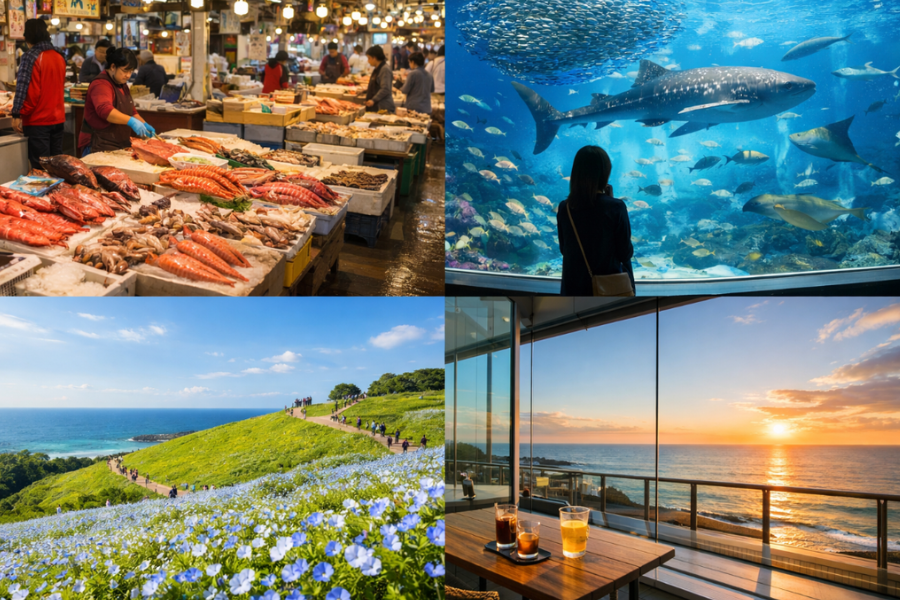
The Nakaminato–Oarai–Hitachi route is a classic coastal itinerary that smoothly connects three highlights in one day: filling up on fresh seafood, unwinding with marine life, and soaking in ocean views. The stops complement each other perfectly, so your mood naturally keeps rising from morning to evening.
Along the way, it’s also worth dropping by Hitachi Seaside Park, where you can take a relaxing stroll with the sea breeze and beautiful scenery. From savoring great food at the market to the park’s wide-open atmosphere, the aquarium’s immersive world, and the lingering calm of a scenic seaside station—this flow leaves you with a real sense of “I actually traveled,” even on a day trip.
Recommended Schedule
Times are approximate. Hours may vary by date, so be sure to check the official websites before you go.
- 09:00 Nakaminato Fish Market (seafood breakfast to kick off the day)
- 11:00 Hitachi Seaside Park (a scenic walk—seasonal flowers are a bonus if you catch them)
- 12:30 Lunch (try an Ibaraki soul food dish to get a taste of the local culture)
- 14:00 Aqua World Ibaraki Oarai Aquarium (relax indoors—also a great backup if the weather turns)
- 17:30 Hitachi Station (viewpoint → SEA BiRDS CAFE to watch the sunset over the ocean)
Spot Highlights
1. Nakaminato Fish Market (Hitachinaka)
A lively market packed with shops right by the fishing port—perfect for starting the day on a high note. The earlier you go, the more energetic it feels, and the more options you’ll have. The market is generally listed as open 7:00–17:00, but hours and closing days vary by shop. Access is straightforward: from JR Katsuta Station, take the Hitachinaka Seaside Railway to Nakaminato Station, then walk about 10 minutes.
The best approach is simple: take one lap first to get a feel for prices and decide what you really want before buying. Even a quick look around can help you find your “this is it” pick for the day. It works well for both casual snacking and a proper meal, so it’s an easy win even if your group has different food preferences.
2. Aqua World Ibaraki Oarai Aquarium (Oarai)
One of the largest aquariums in the Kanto region. Hours typically run 9:00–17:00 (last entry 16:00), while many winter weekdays are 9:00–16:00 (last entry 15:00)—so schedules vary by season. Admission is 2,300 yen for adults, 1,100 yen for elementary & junior high students, and 400 yen for children ages 3+. The aquarium also announces maintenance closure days each year, often around June and December.
Rather than trying to rush through every single highlight, this is the kind of place where you’ll enjoy it more by going deeper into the exhibits you personally love. Pause in front of a tank that catches your eye and give yourself permission to simply zone out for a moment—travel fatigue melts away surprisingly fast. Since it’s indoors, it’s also a reliable plan even on rainy or cold days.
3. Hitachi Seaside Park (Hitachinaka)
A go-to stop that’s easy to fit in because it’s on the same Hitachinaka side as Nakaminato. Opening hours change by season, and the park’s regular closing day is generally Tuesday (or the next weekday if Tuesday is a public holiday). Admission is listed as 800 yen for adults (high school age and up), 560 yen for seniors (65+), and free for junior high students and younger (with seasonal pricing variations).
The park is huge, so if it’s your first visit, it’s best to treat it as a “walk and breathe” day and focus on just one or two areas. Of course, the flower seasons are famous, but even outside peak bloom times, the wide sky and sea breeze alone are enough to feel refreshed. Placing it between the market and the aquarium works especially well—it resets both your body and your mood for the second half of the day.
4. Hitachi Station
A station with views so good it feels like a destination in itself—great for photos and for wrapping up the day. With its glass architecture and sweeping Pacific Ocean views, it’s often mentioned alongside design awards such as the Brunel Award and the Good Design Award. The station-connected SEA BiRDS CAFE is located on the east exit side, about a one-minute walk away.
Hitachi Station isn’t so much about “going sightseeing” as it is about going to see the scenery. In the late afternoon, the ocean changes color as the light shifts, so the same view feels different minute by minute. Ending your trip here works beautifully—not only for a strong final photo, but also for a calm, satisfying emotional finish.
Ibaraki “Soul Foods” to Try for Lunch or Snacks
Ibaraki cuisine isn’t only about seafood—local comfort foods are a big part of the charm. If you add just one of these somewhere between lunch and snack time, your trip instantly feels more “local” and more memorable.
- Stamina Ramen (thick, savory sauce-style): A beloved local noodle dish in areas like Hitachinaka and Mito, often discussed as part of the region’s ramen culture.
- Tsukekenchin (tsukekenchin soba): Cold soba noodles dipped into a hot, hearty kenchin soup—especially satisfying in autumn and winter.
- Anko Nabe (monkfish hot pot): A classic winter specialty in Oarai, with different flavors depending on the restaurant.
- Natto dishes (Soboro/“Shoboro” Natto): A traditional Mito-style dish made by marinating natto with dried daikon strips.
- Oarai Mitsu-dango (Tarashi): A local sweet from Oarai, often introduced as a town favorite.
Summary
Start your morning with seafood in Nakaminato, spend the afternoon unwinding at the aquarium, and finish the day watching the ocean from Hitachi Station—this coastal route in Ibaraki neatly delivers great food, fun experiences, and beautiful scenery in a single day. With Hitachi Seaside Park in the middle, you get a well-balanced rhythm of walking, resting, and taking in views, so even a day trip leaves you with a lasting afterglow. Since the scenery and experiences shift with the seasons, it’s the kind of itinerary you’ll want to revisit to find your best version of Ibaraki.